Dermatopathology Fundamentals

Dermpath, made practical for NPs and PAs

Avoid common biopsy pitfalls, read path reports with confidence, and work better with your pathologist. A self-paced online course from a double board-certified dermatologist and dermatopathologist.


Founding price

$247

Regular price $347 · Founding price ends Sunday, Nov 8

  • Self-paced video lectures in 3 parts
  • Two printable guides to keep: The Dermpath Companion (26 pages) and the Quick Reference Guide (12 pages)
  • 6 months of access
  • Receipt for employer reimbursement
  • Full refund within 30 days if you’ve viewed 20% or less

Up to 6 CME/CE credits: AMA PRA Category 1™, AAPA Category 1, ANCC contact hours and IPCE
Enroll now

1,700+

clinicians have taken a DermPath course or read the newsletter

96%

said my earlier course was useful to their practice

97%

said it increased their competence

Percentages from 221 CME evaluations of my earlier course, Dermpath Essentials.

No one wants to miss something

Most NPs and PAs learn biopsies and path reports on the job. So it’s easy to end up here:

A report says “consistent with” or “cannot exclude,” and you’re not sure what to do next
A biopsy comes back non-diagnostic, and your patient needs another procedure
You worry about missing a melanoma or choosing the wrong biopsy
You’re not sure what clinical information the pathologist actually needs

As a dermatologist and dermatopathologist, I’ve seen these same questions come up again and again, from both sides of the biopsy.

This course helps you avoid the most common pitfalls.

You’ll learn what the report means, which biopsy to take, and what your pathologist needs from you, so you can act with confidence.

What you’ll be able to do

  • ✔Avoid the most common biopsy and report pitfalls
  • ✔Understand what your pathologist does and how your specimen becomes a slide
  • ✔Know the common stains and what they’re used for
  • ✔Choose the right biopsy for rashes, skin cancers, pigmented lesions, alopecia and nails
  • ✔Know when and how to send DIF and tissue cultures
  • ✔Write requisitions that get you a more specific diagnosis
  • ✔Interpret descriptive pathology language and know what to do next
  • ✔Explain the difference between Mohs and a standard excision
  • ✔Lower your risk with melanocytic lesions

What’s inside

Three parts, 22 short lectures. Watch at your own pace.

Part 1 · Dermpath Core Knowledge (8 lectures)

  1. Course overview and objectives
  2. Who is your dermatopathologist?
  3. Basic skin histology
  4. Specimen processing
  5. Grossing and sectioning basics
  6. Stains in dermatopathology
  7. Basic inflammatory patterns
  8. Understanding the pathology report

Part 2 · Dermpath Biopsy Tips (7 lectures)

  1. General biopsy tips
  2. Rashes
  3. Non-melanocytic lesions
  4. Melanocytic lesions
  5. Alopecia
  6. Nail plate biopsy
  7. The importance of clinical information

Part 3 · Common APC Questions Answered (7 lectures)

  1. How and when should DIF be used?
  2. What’s the difference between Mohs and an excision?
  3. What’s the best way to do a tissue culture?
  4. Why isn’t my pathology report specific?
  5. What are common dermpath pitfalls to avoid?
  6. Why does scar at the excision margin matter?
  7. Melanocytic lesions: minimizing risk from a dermpath perspective

Two guides that are yours to keep

Download them, print them, and keep them open in clinic.

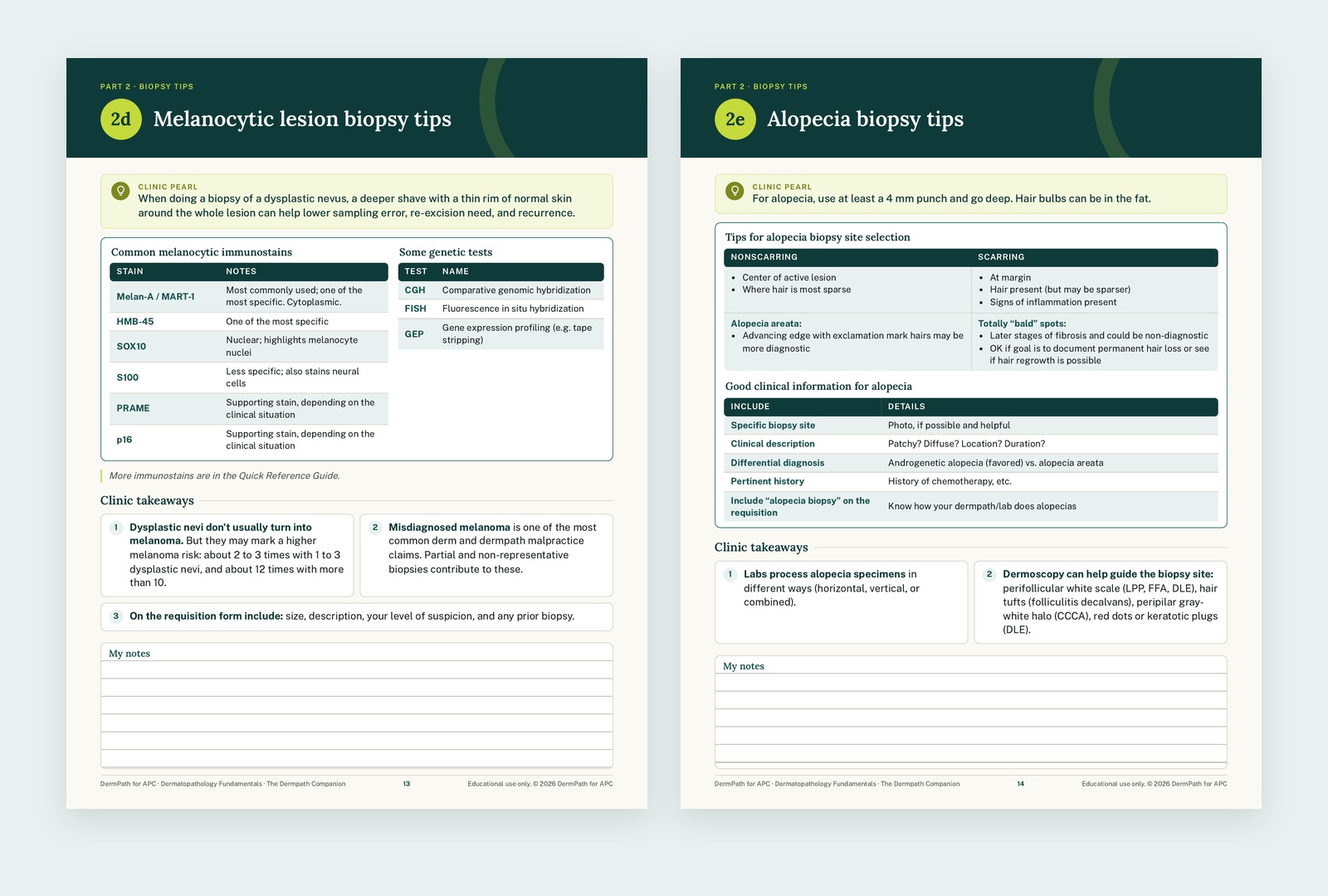
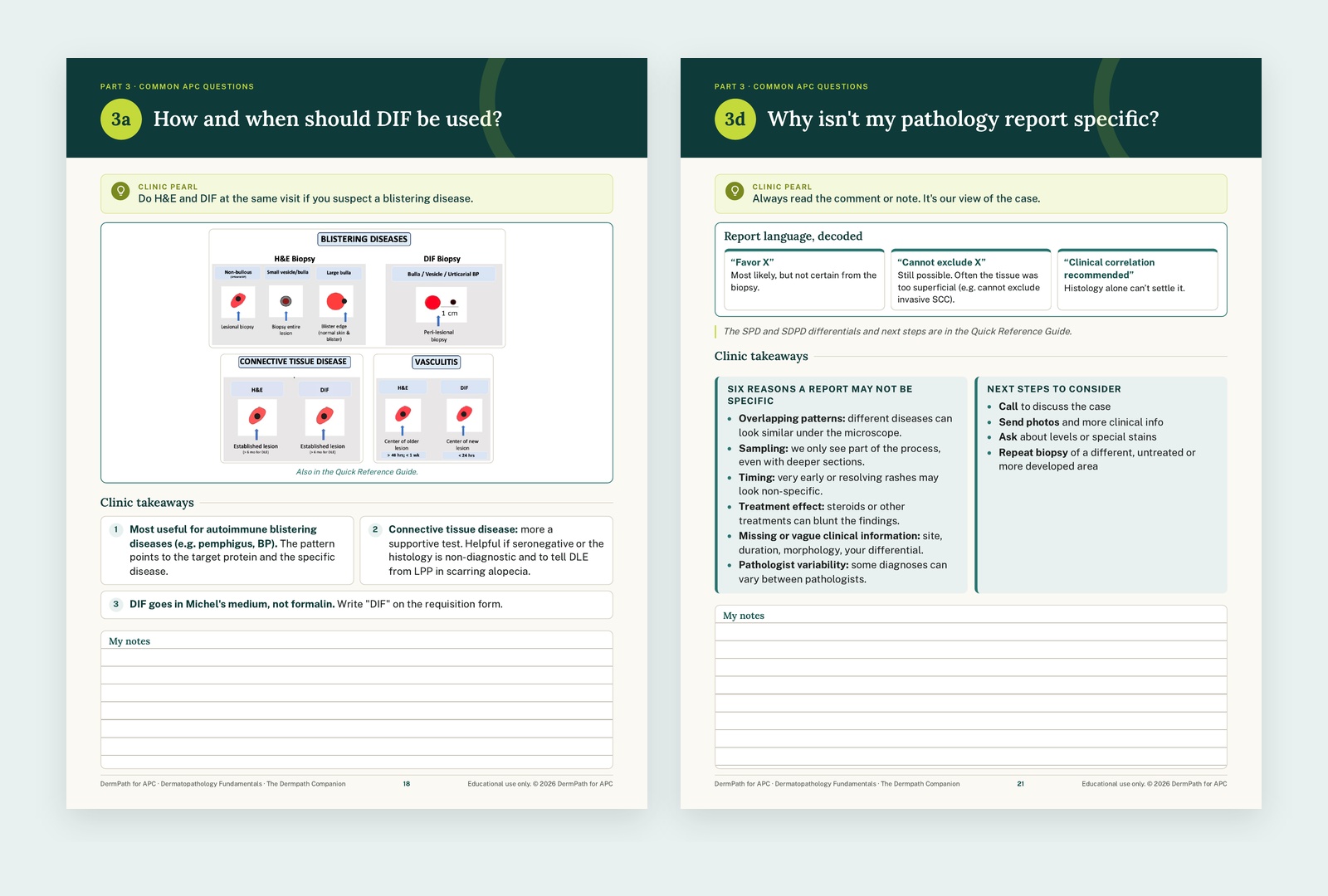
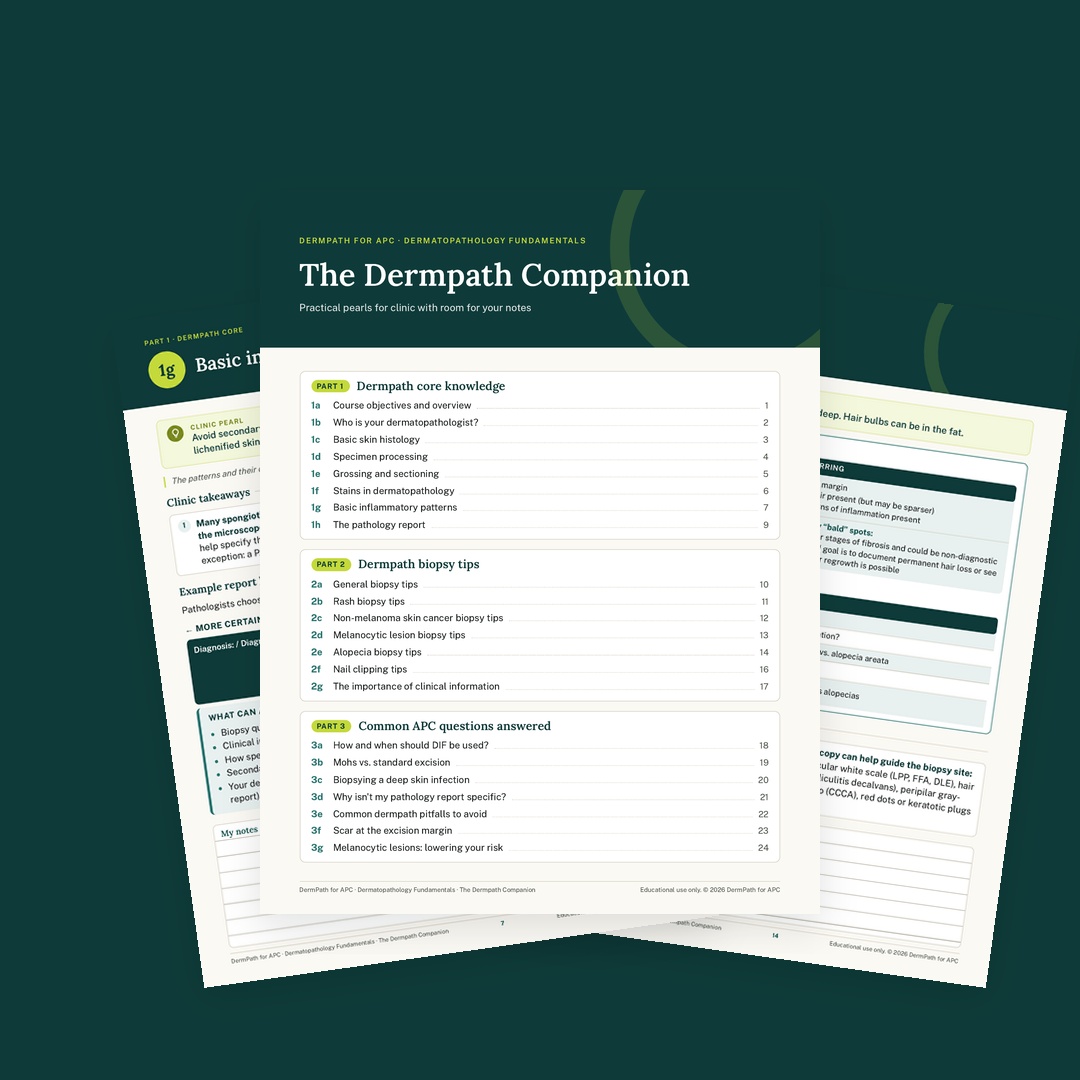
Pages of The Dermpath Companion fanned out

The Dermpath Companion

26 pages

Practical pearls for clinic, with room for your notes. It follows the course lecture by lecture: a clinic pearl, the key takeaways and space for your own notes.

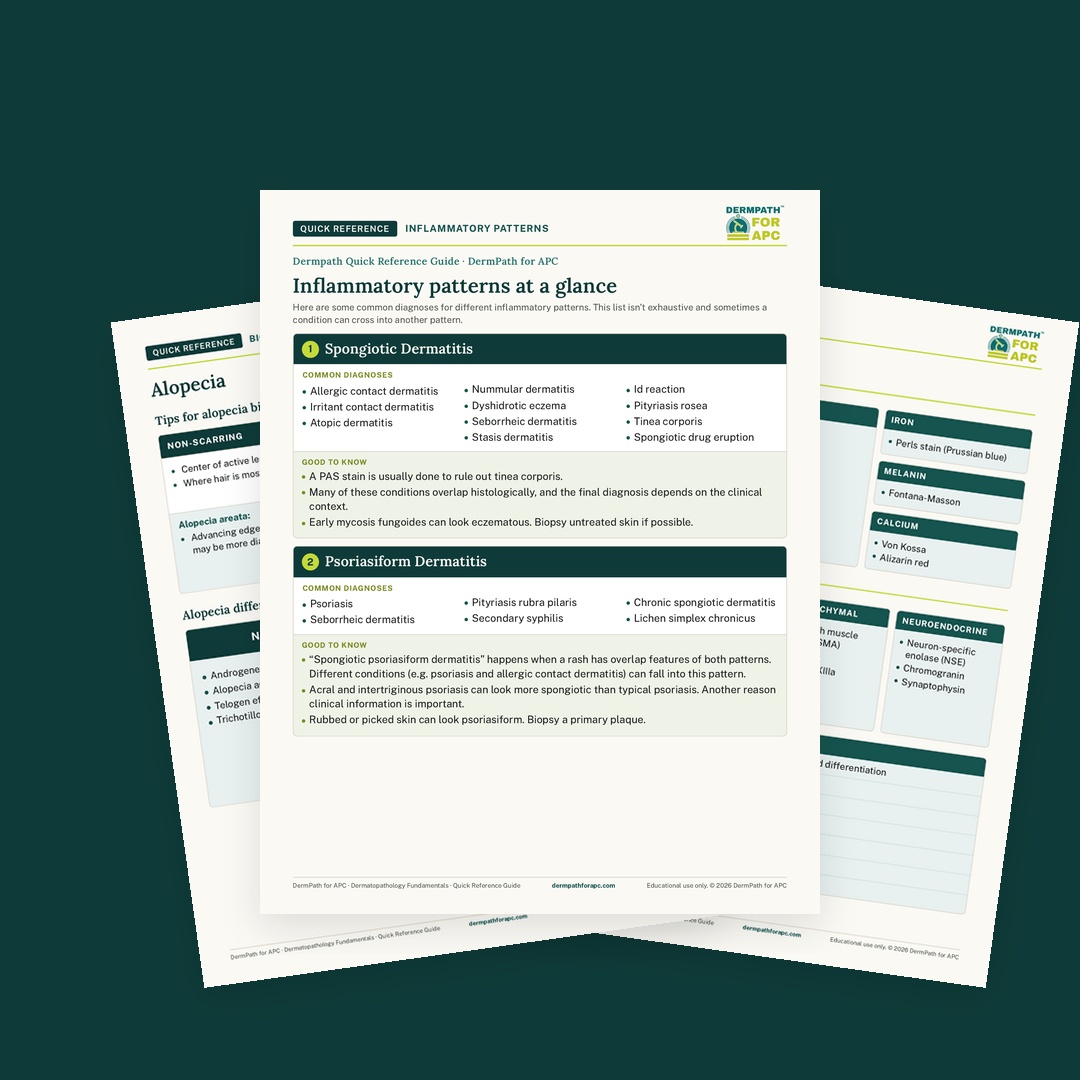
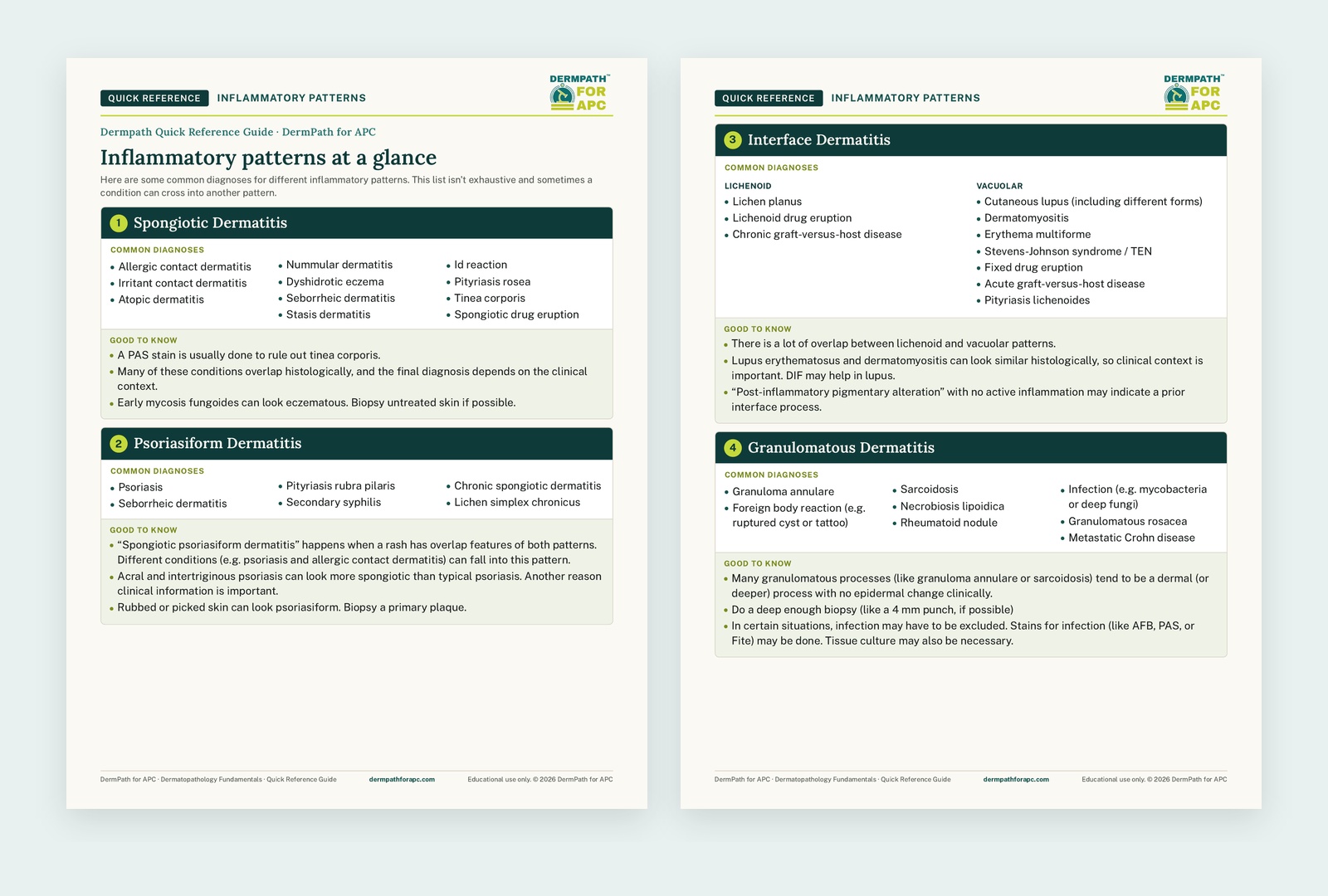
Pages of the Dermpath Quick Reference Guide fanned out

The Quick Reference Guide

12 pages

The at-a-glance guide: inflammatory patterns and their common diagnoses, what to consider with a non-specific report, where to biopsy, alopecia site selection, and the stains you’ll see on reports. Print it and keep it in clinic, so it’s right there when a report comes back.

A peek inside

Companion pages: melanocytic and alopecia biopsy tips
Quick Reference Guide pages: inflammatory patterns
Companion pages: common APC questions

Updated from learner feedback

Fundamentals builds on my earlier course, Dermpath Essentials. About two-thirds of it is newly developed and recorded, and the rest has been updated. Here’s what past learners asked for, and what changed:

  • More clinical cases throughout
  • Less repetition between lectures
  • More on reading the report, including why a report isn’t specific
  • Two guides to keep: The Dermpath Companion (26 pages) and the Quick Reference Guide (12 pages)
  • New lectures on DIF, tissue culture and nail biopsies

Is this course for you?

It’s for you if you…

  • Are a dermatology NP or PA, at any stage
  • Work in primary care and biopsy skin
  • Want to understand path reports, not just file them
  • Want fewer non-diagnostic biopsies and repeat procedures

It’s not for you if you…

  • Are looking for board-review-level histopathology
  • Need a live, scheduled class
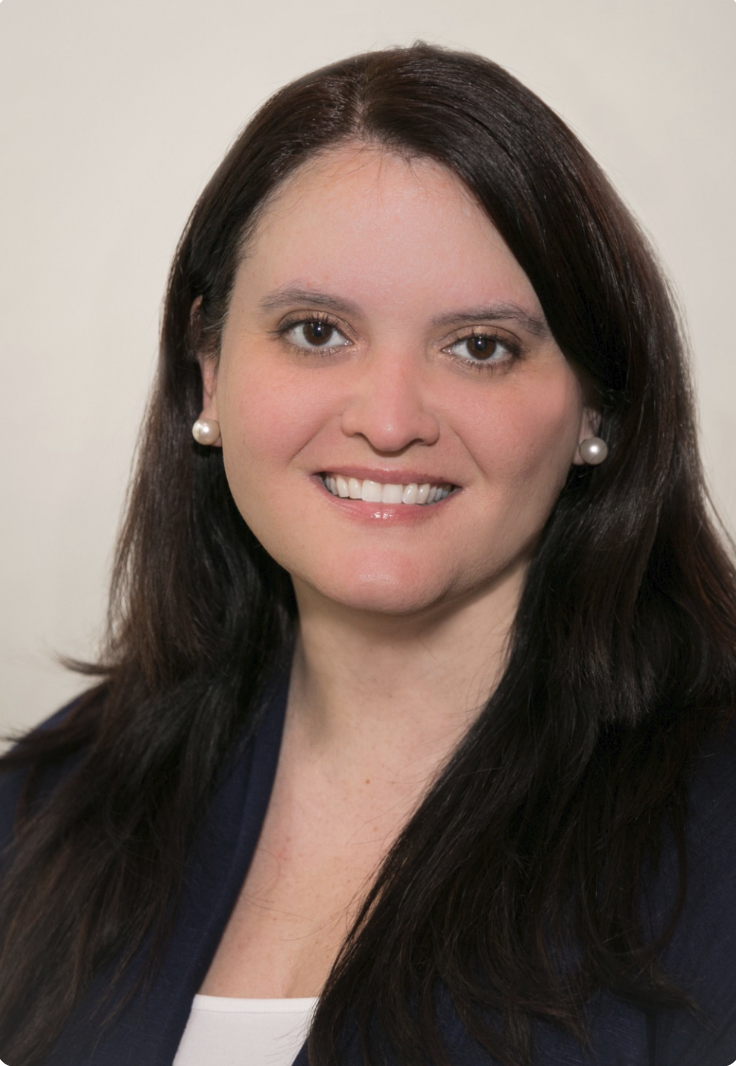
Maria Robinson, MD

Meet your instructor

Maria Robinson, MD, MBA, FAAD, is double board-certified in dermatology and dermatopathology. She spent years working alongside dermatology PAs and NPs, and now reads their biopsies as a dermatopathologist. She saw the same questions and biopsy pitfalls come up again and again, and found that APC training has no standardized dermpath curriculum.

She built DermPath for APC to fill that gap, focused on what clinicians actually need: choosing the right biopsy, understanding the report, and knowing the next step.

What clinicians said about my earlier course

“This program was informative, easily understood and practical. I would not hesitate to recommend it to other APCs in dermatology.”

S.W.

“I feel this course should be recommend[ed] for all APCs who are beginning their dermatology journey… this would have been very helpful in my early stages of learning to be a dermatology PA.”

K.T., PA

“Great course to understand more in detail everything I’m reading in a biopsy report. Also great suggestions how to improve getting accurate diagnoses in a timely manner.”

D.F., APRN

“The tips on scalp biopsies were extremely useful as well and I will be adding more detail to my submission sheets with my biopsy samples from here forward.”

D.M.

“It provides a deeper understanding of the process at the lab after biopsy is taken and includes helpful tips on biopsy for different types of skin lesions.”

A.I.

“I feel even more confident with performing a shave, punch or excisional biopsy on my patients, and getting the most accurate answers from the dermatopathologist that I work with.”

J.C.

“I would recommend this to any advanced practice clinician regardless of how many years of experience they have. As a PA in dermatology for over 10 years I picked up many useful tips from this course.”

PA in dermatology, 10+ years

From learners in Dermpath Essentials, my earlier course (221 CME certificates earned). Fundamentals is updated and mostly new.

Start building your dermpath confidence

Enroll at the founding price through Sunday, Nov 8. After that, the course is $347.

Founding price

$247

Regular price $347 · Ends Sunday, Nov 8

  • Up to 6 CME/CE credits
  • All 3 parts, 22 lectures
  • Two guides to keep: The Dermpath Companion (26 pages) and the Quick Reference Guide (12 pages)
  • 6 months of access
  • 30-day refund if 20% or less viewed
Enroll now

Questions

I took Dermpath Essentials. Is this different?

Yes. Fundamentals builds on Essentials, but about two-thirds of it is newly developed and recorded, and the rest has been updated based on learner feedback: more clinical cases, less repetition, and new lectures on DIF, tissue culture, report language and nail biopsies.

I’ve been in dermatology for years. Will this be too basic?

Many experienced NPs and PAs took my earlier course, including clinicians with 7, 10 and 21 years in dermatology, and they said they still picked up new pearls. Part 3 answers the questions experienced APCs ask most.

I'm busy. How much time does it take?

It's 22 short lectures (10 to 30 minutes each) you can watch at your own pace, between patients or during lunch, with 6 months of access.

How long do I have access?

6 months from enrollment, so you can go at your own pace.

Does it offer CME?

Yes. The course offers 6 CME/CE credits: AMA PRA Category 1 Credits™, AAPA Category 1 CME credits, ANCC contact hours and Interprofessional Continuing Education (IPCE) credits. Nurse practitioners can also submit AMA PRA Category 1 credit to AANP. Credit is provided by Pinnacle Conference, LLC, a jointly accredited provider.

Can my employer reimburse me?

You’ll get a receipt you can submit for CME or education reimbursement, or keep for your taxes. You can also ask your tax advisor whether it's deductible for you.

What’s the refund policy?

Full refund within 30 days of purchase if you’ve viewed 20% or less of the course.

I work in primary care. Is this for me?

Yes, if you biopsy skin. The biopsy tips, requisition and report sections apply directly.

Do you offer group pricing for practices?

Yes. Email [email protected] for practice pricing.

CME/CE information

Pinnacle and Joint Accreditation logos

This activity offers up to 6 credits: AMA PRA Category 1 Credits™ (physicians), AAPA Category 1 CME (physician associates), ANCC contact hours (nurses) and Interprofessional Continuing Education (IPCE) credits. Nurse practitioners can apply for AMA PRA Category 1 Credit™ through AANP. All other learners receive a participation certificate. Enduring activity, October 15, 2026 to October 15, 2029.

In support of improving patient care, this activity has been planned and implemented by Dermpath for APC and Pinnacle Conference, LLC. Pinnacle Conference, LLC is jointly accredited by the Accreditation Council for Continuing Medical Education (ACCME), the Accreditation Council for Pharmacy Education (ACPE), and the American Nurses Credentialing Center (ANCC) to provide continuing education for the healthcare team.